

Here’s a pattern I see with builders.
They ship all week. A new feature on Monday. A bug fix on Wednesday. A big change on Friday.
Then they open X, stare at the empty box, and close it. “I’ll post when there’s something worth saying.”
That day never comes. The work piles up in git. The audience stays at zero.
I did the same thing for the first part of this project. Then I stopped and asked a different question:
What if the work I’m already doing is the content?
Traffiklist is a launch board for indie makers. I started building it on 2026-09-14. Since then there have been 211 commits. Every one of them is a small story: what I tried, what broke, and what I learned.
So I built a Claude Code skill called daily-build-posts. It reads my git history and turns what I shipped into posts for X, LinkedIn and Substack Notes.
I’m not just building a product. I’m building a product and a following, with the same hour of work.
This post shows you how, step by step. You’ll get the tools, the skill, the real results so far (including the failures), and a template you can copy.

Before moving to today’s meat, let me share who won the launch board of last week on TraffikList.
🚀 Winners of Last Week
Dynamite Docs -AI Powered Document Extraction for Accounting — Extract invoices, receipts, and statements with AI in Dynamite Docs.
Humanish — Finds X posts worth replying to, drafts replies in your voice, and checks each for common AI tells.
BidVariance — Monte Carlo bid estimating for contractors: see the probability of coming in under each price.
Briefpanel — Track any web page item by item: new, removed and changed products, prices, jobs or listings, with alerts and an API.
MakeASkill — Personal instructions that make any AI assistant fit you
Outline:
Why build in public (and what it is not)
The tools you need (and what each one does)
How I built the skill (the real story)
How the skill works, step by step
What I’ve achieved so far: wins and failures
The vision: where Traffiklist is heading
Steal this: your 30-minute setup
Mistakes to skip
1. Why Build in Public (and What It Is Not)
Build in public means you share the work while you do it. Lessons. Numbers. Mistakes. Wins.
It isn’t:
❌ A highlight reel of only wins
❌ Daily “I’m so grateful” posts with no substance
❌ A replacement for building a good product
It is:
✅ A habit of turning real work into useful posts
✅ A way to find your first users and your first followers
✅ A public record that makes you more honest, because people can check
Here’s the truth:
Builders trust builders who show their numbers. When I post the real figure, even a small one, people reply. When I post a bigger-sounding claim, nobody does.
That’s why my rule is simple: use the real number, not a bigger one.
2. The Tools You Need (and What Each One Does)
You don’t need a big stack. Here’s what I use and why.
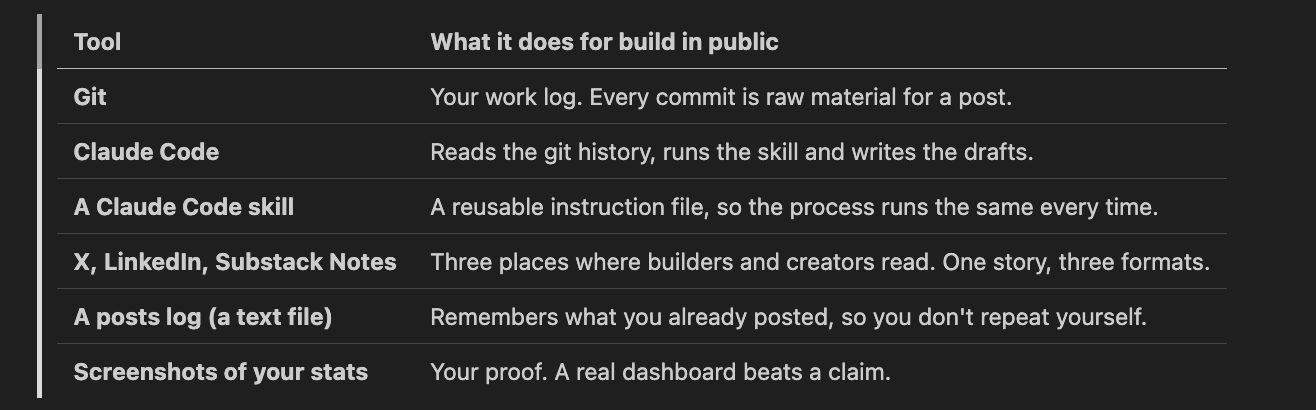
For the product itself I use Next.js, Supabase, and Vercel. But you don’t need any of that to start. If you have a Git repo and a place to post, you have everything.
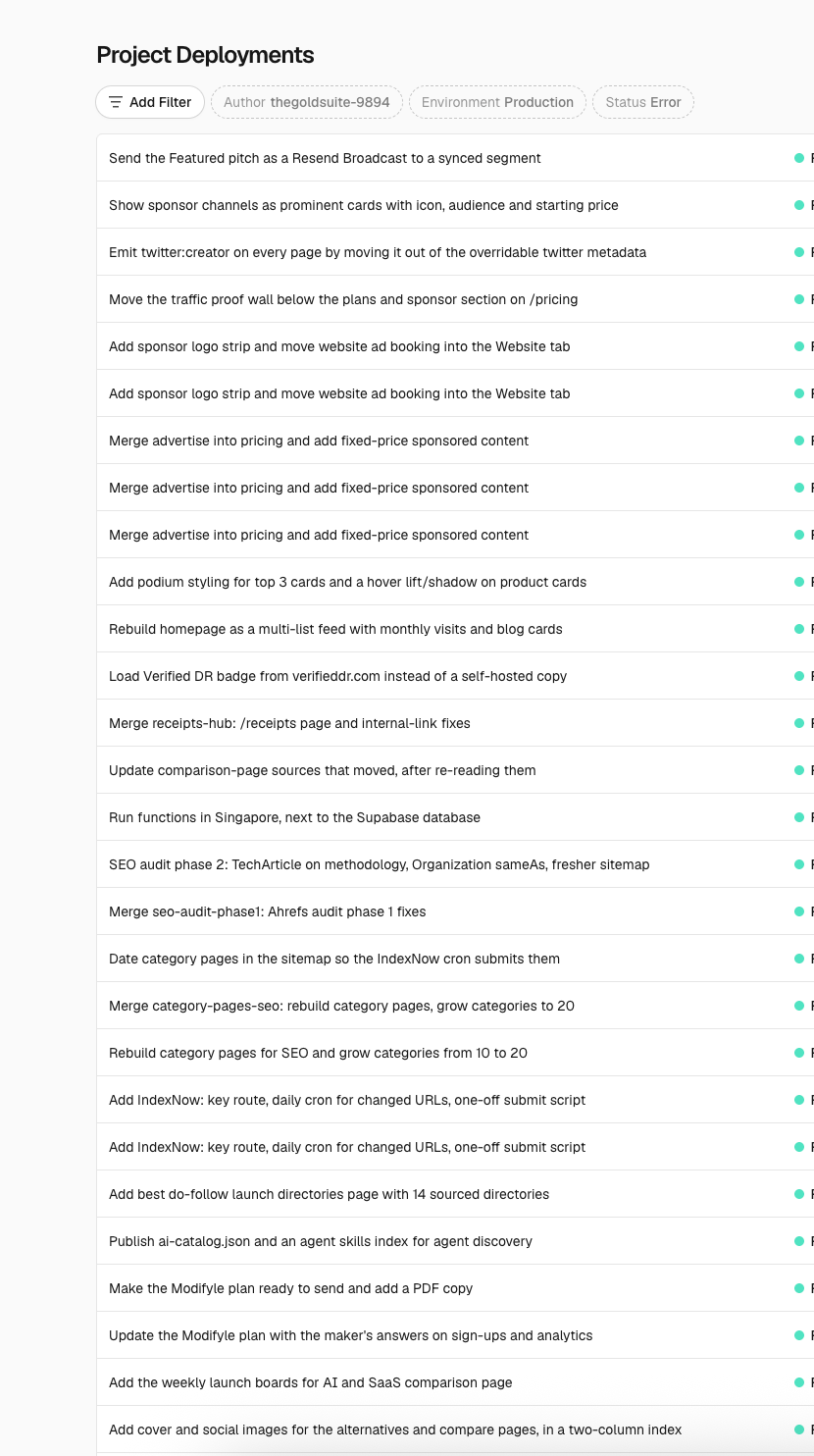
Every commit is a story waiting to be told.3. How I Built the Skill
Let me show you the process, not just the result.